
Neoloy® Tough-Cells are designed to align with leading geocell standards and guidelines, including CROW/SBRCURnet, ASTM D8269-21, and ISO/TR 18228-5. These references help engineers evaluate geocell solutions with greater confidence for road base reinforcement, soil stabilization, load support, and long-term infrastructure performance.
Key message: not all geocells perform the same way. Material properties, geometry, seam strength, connection strength, infill type, loading conditions, environmental exposure, and design life all influence long-term performance.
ISO/TR 18228-5 provides design guidance for geosynthetic-stabilized granular layers. It focuses on deformation control, design life, and project-specific performance.
For geocells, ISO distinguishes stabilization by confinement from the tensioned membrane mechanism. Geocells mainly improve performance through 3D external confinement. The cell walls restrain horizontal infill movement, mobilize hoop tension, and help distribute vertical loads over a wider area.
ISO also follows a conservative performance approach for long-term geocell behavior. It limits allowable permanent deformation up to 2% under loading, reinforcing the importance of dimensional stability and creep resistance over the full design life. This helps engineers evaluate whether the geocell can maintain confinement without excessive stretching or loss of structural function.
The document also references recognized empirical and mechanistic design approaches. These apply to roads, railways, working platforms, load transfer platforms, and foundations. This reinforces an important engineering principle: engineers should select the design method according to the application, loading conditions, subgrade behavior, infill material, and required design life.
ISO/TR 18228-5 also connects geocell performance to relevant material properties and test methods. These include tensile strength, stiffness, creep resistance, seam strength, and durability. These properties help engineers evaluate whether the selected geocell can maintain confinement and structural performance throughout the required design life.
For more technical details, download the ISO/TR 18228-5 standard summary.
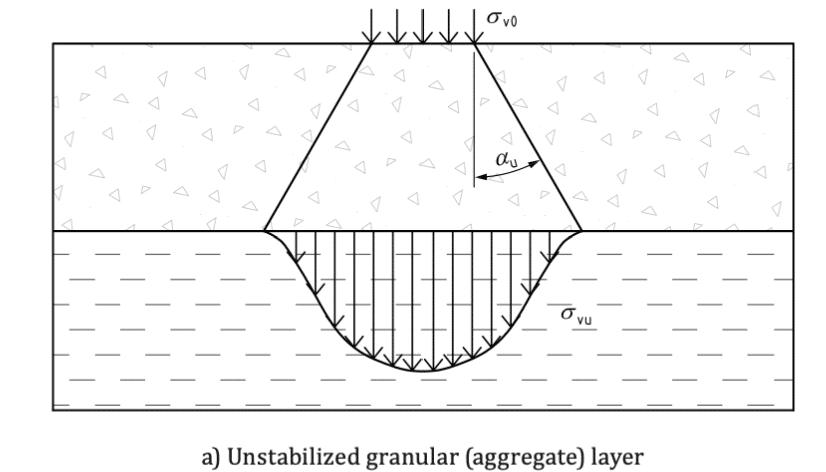
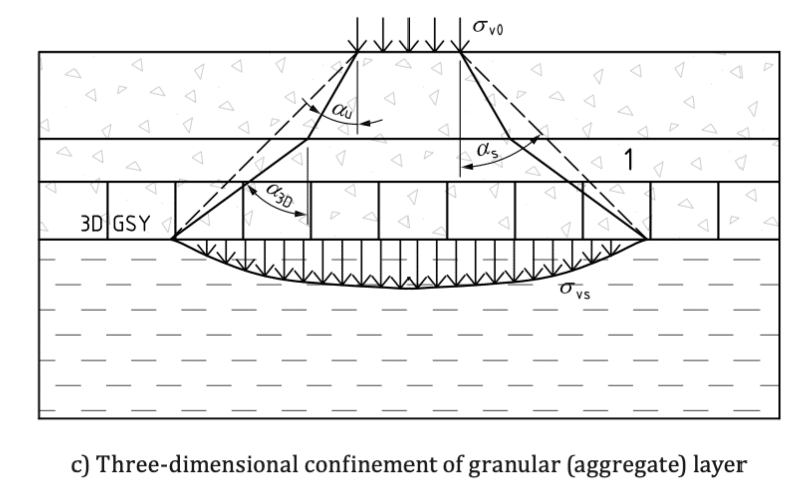
ASTM D8269-21 is a key reference for engineers who use geocells in geotechnical and roadway projects. These include load support, subgrade improvement, retaining structures, slopes, channels, and erosion protection.
The standard reinforces an important engineering principle: geocell selection must be project-specific. Materials, geometry, seam strength, connectors, infill type, and installation conditions can all affect performance. Engineers should base design decisions on reliable test results, research, and project requirements.
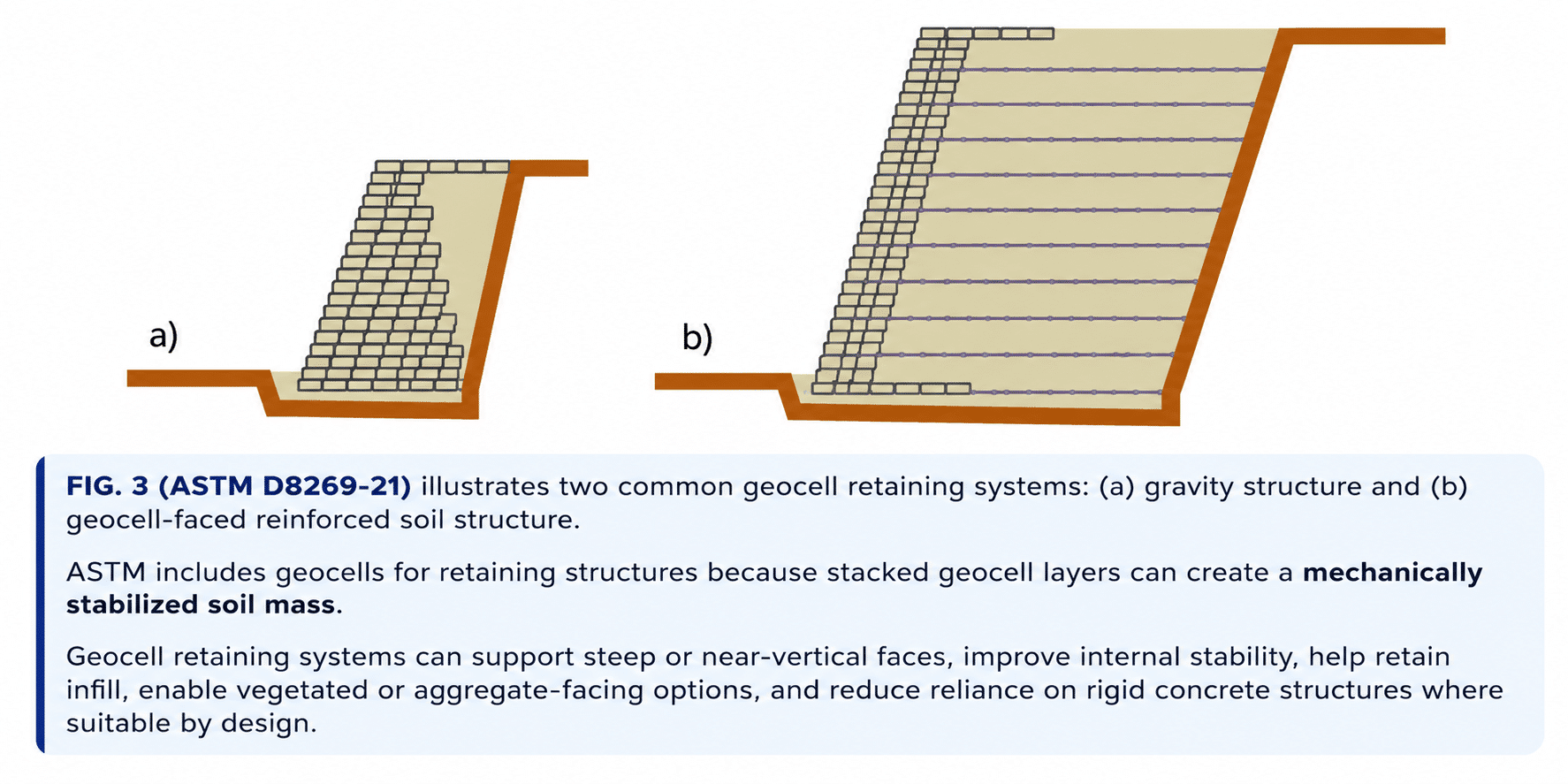
ASTM D8269-21 also explains how geocells work as a three-dimensional mechanical stabilization system. It highlights two main mechanisms: lateral confinement and the mattress effect. Lateral confinement restricts infill movement, while the mattress effect helps interconnected cells distribute loads over a wider area.
For engineers and project owners, this means product shape alone does not define geocell performance. Long-term performance depends on tensile strength, stiffness, creep resistance, seam integrity, connection strength, environmental durability, and the ability to maintain confinement throughout the design life.
In load-support applications, properly designed and installed geocells can improve layer stiffness, reduce vertical deformation, distribute stresses to underlying layers, and support a wider range of infill materials.
To dive deeper, explore the ASTM D8269-21 standard summary.
The Dutch CROW / SBRCURnet guideline is a design reference for engineers using geosynthetics in road base and subbase reinforcement. It focuses on how reinforcement geosynthetics, including geocells, can improve the performance of unbound pavement layers in unpaved roads, asphalt pavements, concrete pavements, and paving block systems.
The guideline explains how geocells contribute to pavement performance through confinement, load distribution, stiffness improvement, and deformation control. It also connects geocell performance to pavement design methods, material properties, improvement factors, and project-specific design criteria.
For engineers, its value is that it links geocell selection to measurable performance requirements, not only product geometry. These include elastic stiffness, resistance to permanent deformation, tensile strength, seam strength, and the ability to maintain reinforcement performance over time.
The table below presents a translated overview of the CROW guideline requirements for geocell properties, including key performance parameters, testing methods, and reference values used to support material evaluation.
For more details, [see the translated summary of the CROW guidelines], to explore the engineering basis behind, including material properties, test methods, performance values, and design considerations for road base reinforcement.
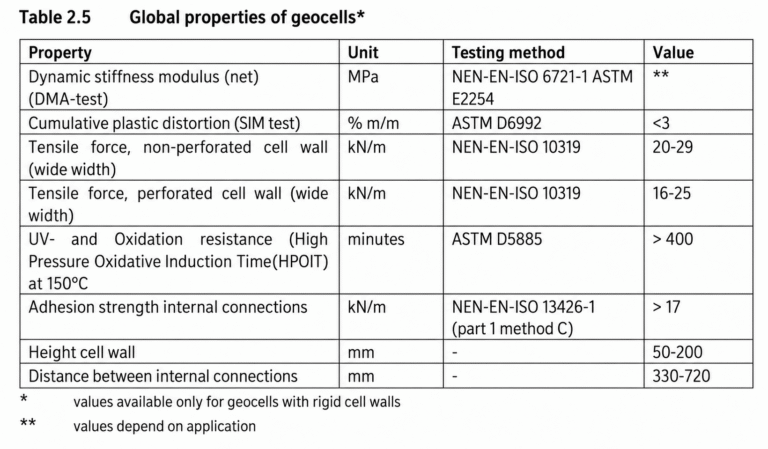
Source: CROW Guideline for Determining the Improvement Factors and Design of Geocells in Road Building, NL
CROW/SBRCURnet, ASTM D8269-21, and ISO/TR 18228-5 all point to the same engineering principle: geocells should be evaluated by their ability to maintain confinement, stiffness, seam integrity, and dimensional stability over the full design life — not by cell shape alone.
This is where Neoloy® Tough-Cells provide clear value. Their performance is supported by long-term material properties, validated test methods, and project-specific engineering design for demanding infrastructure applications.
Learn more: Engineering Properties (missing to add link)
A geocell should be selected based on validated performance under project-specific conditions, including application type, subgrade, infill material, static and cyclic loads, environmental exposure, geometry, material stiffness, creep resistance, tensile strength, connection integrity, and field validation.
PRS can evaluate your site conditions, performance requirements, design life, and applicable standards to recommend the right Neoloy® Tough-Cells solution