
As engineers, developers, contractors and municipal planners face greater pressure to meet construction sustainability targets amid rising costs, geocell technology and particularly geocells for soil reinforcement are increasingly coming into focus.
The 3D, honeycomb-like structures are not only bolstering sustainability efforts but also cutting construction costs.
Additionally, the Neoloy Tough Cells (NPA) geocells, are advancing the technology to enhance long-term performance.
Why Construction Costs Continue to Rise Globally
The construction industry has been heavily impacted by global trade policy uncertainty and potential disruptions to trade flows, with the cost of building materials rising 3-7% on average.
The spike in labour costs, driven by skilled labour shortages, as well as rising transport and fuel costs have also negatively impacted construction expenses.
This problem is exacerbated by shortened maintenance cycles.
Weighing up these factors, it becomes clear that traditional soil reinforcement methods are too material-intensive and inefficient.
Why Weak Soils Drive Long-Term Construction Costs
It is both expensive and time-consuming to introduce thicker layers to weak subgrades so that bearing-capacity requirements can be met.
Even in cases where foundation soil improvement seemingly has been carried out successfully, there are still no guarantees.
Poor soil quality can still lead to settlement, road deformation or substandard load transfer.
Not only is the money already spent on a project wasted but there are now additional expenses for having to redo the work.
How Geocells Reduce Construction Costs
How Geocells Work
The Neoloy geocells’ honeycomb structure confines soil or aggregate to each cell.
Because movement is prevented in the geocells, there is also lateral confinement of infill soil. Thus, geocells for erosion control are a massive boon.
The overall structure also improves load distribution because loads are spread over a wider area, while it follows that vertical deformation is also greatly reduced.
In addition, due to its unique structure, Neoloy allows the use of low-quality, recycled, or locally available fill materials within its cells. Through its unique confinement mechanism, these materials are transformed into a load-bearing layer that can be stronger than gravel.
Quantified Cost Benefits of Geocells
The advent of geocell installation for infrastructure is helping to cut costs.
The technology does this by reducing aggregate thickness and making use of infill that is locally available.
Furthermore, geocell soil stabilization techniques are significantly faster than their traditional counterparts.
The US Federal Highway Administration has frequently extolled geosynthetic road foundations as a cheaper and faster option.
Sustainability Benefits of Geocell Soil Reinforcement
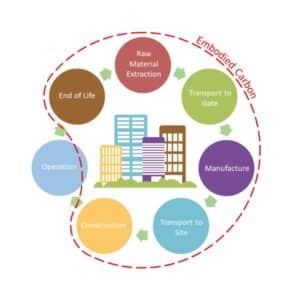
The topic of embodied carbon or the amount of carbon or carbon emissions it takes to produce a material – is now centre stage.
Geocells are playing a major part in the drive towards global sustainability.
Since less aggregate is extracted and transport requirements are minimal in Neoloy, the embedded carbon level is far lower.
Even more impressively, sustainability is achieved through engineering efficiency.
Neoloy Tough Cells – The Longest-Term Soil Reinforcement Solution
Neoloy Tough-Cells, supplied by PRS-MED Technologies, are made from Novel Polymeric Alloy, which provides the highest stiffness, strength and durability needed to resist volumetric deformation.
The geocells are born out of a process called Dynamical Mechanical Analysis, which extracts the polymer stiffness in the elastic mode, resulting in the ability to apply loads on the system without permanent deformation.
Ultimately, the technology has been proven to be suitable for heavy loads and demanding conditions, and it also supports lifecycle cost reduction.
Proven Performance in Real-World Applications
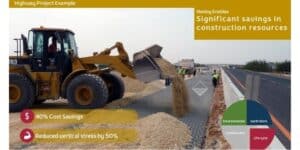
Neoloy Tough-Cells have been used in more than 10,000 construction projects worldwide.
Their versatility of use is well-documented.
In one case, the geocells created a stabilized slope protection system that protected a hydroelectric power plant’s roof from damage and bad weather while providing a stabilized mattress for vegetated cover.
In another instance, the cells were installed on the compacted slope at each of the 19 terraced gardens at a UNESCO World Heritage Site
They confined the soil and minimized the movement of soil particles as well as the impact of rain drops and runoff.
In both cases, material use was substantially reduced, and the performance was significantly improved.
Reducing Construction Costs Without Compromising Sustainability
Geocells address both rising costs stemming from uncertain trade policies and other factors, as well sustainability requirements.
In the current climate infrastructure professionals seek solutions that deliver value, and Neoloy Tough Cells have emerged as a global industry leader in meeting this demand.